
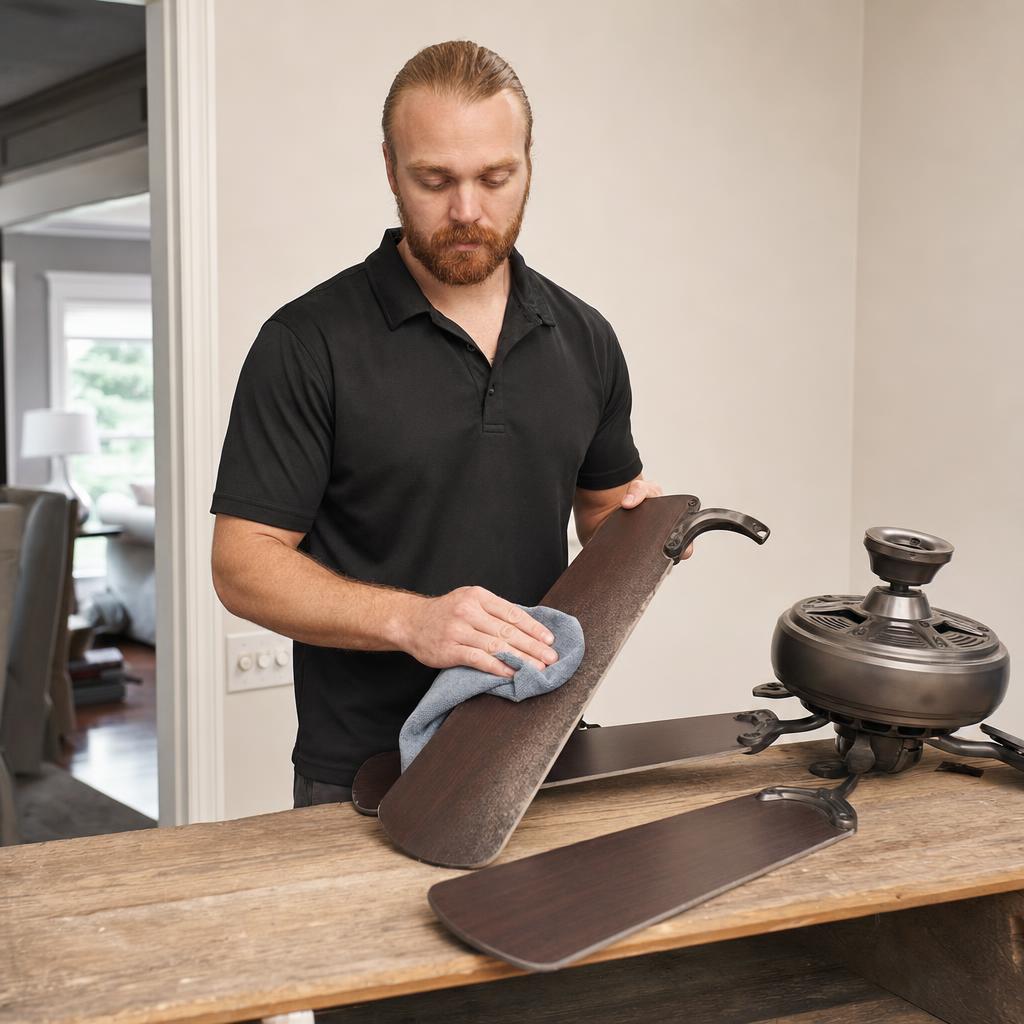
A ceiling fan that wobbles, clicks, or hums can be hard to ignore, especially during a hot Northern Virginia August. Some fan problems come from a loose blade or an unbalanced blade set. Others involve the mounting hardware, electrical box, switch, or motor. Knowing the difference helps you decide whether a basic check is reasonable or whether the fan should remain off until it can be inspected.
Homeowners in Annandale, Fairfax, Alexandria, Arlington, Springfield, and nearby communities often live in houses with a mix of original fixtures and later updates. A fan may look fine from below even when its support or connections need attention. Here is a practical way to assess the problem without taking unnecessary risks.
Why ceiling fans wobble
A slight amount of movement at high speed can be normal, but the fan should not rock dramatically, shake the light fixture, or make repeated contact noises. Common causes include:
- Loose blade screws or blade-arm screws
- A blade that is bent, damaged, or out of alignment
- Dust buildup that creates uneven weight across the blades
- A loose canopy or mounting bracket
- An electrical box that is not suitable or secure enough for a fan
- Worn internal components in an older fan
The amount of wobble does not always reveal the seriousness of the cause. A mildly unbalanced blade may create visible movement, while an insecure mounting point may initially produce only a small shake or intermittent clicking.
Safe checks homeowners can make
Turn the fan off and wait for the blades to stop completely before inspecting it. If you need a step stool, place it on a stable, level surface. Do not reach from a chair or lean sideways to access the fan.
Look for dust and visible blade damage
Heavy dust can collect unevenly, particularly on fans that run throughout the summer. Clean each blade carefully while supporting it so you do not bend the blade arm. Look for swelling, cracks, warping, or a blade that sits noticeably higher or lower than the others.
Check accessible blade screws
With the fan off, inspect the screws that connect each blade to its blade arm. If they are visibly loose and can be reached without removing electrical covers, they may be tightened gently with the correct screwdriver. Avoid overtightening, which can strip a screw or damage the blade material.
Watch the fan at different speeds
After completing basic visual checks, stand clear and run the fan at low, medium, and high speed. Note when the movement starts and whether you hear clicking, scraping, buzzing, or rattling. This information can help identify whether the issue is related to blade balance, a loose component, or the fan itself.
Signs the fan should stay off
Stop using the fan if it shakes heavily, smells hot, makes electrical crackling sounds, causes lights to flicker, or appears loose where it meets the ceiling. You should also turn it off if the canopy has dropped enough to expose wiring or if the ceiling box moves with the fan.
These conditions call for more than a balancing kit or a quick screw adjustment. Turn the fan off at the wall control. If wiring or the mounting point is exposed, switch off the appropriate breaker as well. Do not handle exposed conductors or open the electrical box unless you have the proper knowledge and tools.
Wobble versus electrical noise
Different sounds can point toward different problems. A rhythmic click that follows each rotation often comes from a loose blade component, pull chain, light shade, or decorative cover. A scraping sound can indicate contact between moving and stationary parts. Humming may come from the motor, speed control, or an incompatible wall control.
Do not assume that every hum is harmless. If the sound is new, grows louder, comes with a burning odor, or is accompanied by unusual heat, stop operating the fan. Repeatedly testing a malfunctioning fixture can make the problem worse.
Can a ceiling fan be balanced?
Balancing may help when the mounting point is secure and the blades are in good condition but have small weight differences. A balancing kit uses a temporary clip to locate the affected blade and a small weight to correct it. Before balancing, the blades should be clean, tight, and properly aligned.
Balancing will not fix a loose ceiling box, damaged blade arm, failing motor, or poor mounting arrangement. If the entire fan shifts at the ceiling, focus on the support rather than trying to compensate with blade weights.
Repair or replace?
Repair may make sense when the fan is otherwise in good condition and the issue is limited to accessible hardware, blade alignment, a light-kit component, or mounting correction. Replacement may be more practical when blades are damaged, parts are unavailable, the motor is failing, or the fan has recurring problems.
If you are considering a new fan, its size and weight must be appropriate for the room and mounting location. The ceiling box and support also need to be suitable for ceiling-fan use. Replacing a light fixture with a fan is not always a simple fixture swap because a fan creates movement and requires dependable support.
Practical ceiling fan help in Northern Virginia
A wobbling fan is easier to address before loose parts, damaged blades, or mounting movement become worse. Drew, the owner-operator of Handy Vikings, can help assess common ceiling fan and household repair issues and discuss an appropriate next step.
For Northern Virginia home repair help, call (703) 424-4285 or request an estimate at handyvikings.com.
Frequently asked questions
Is a small amount of ceiling fan wobble normal?
A slight movement at higher speeds can occur, but the fan should not shake heavily, move at the ceiling, rattle continuously, or make the light fixture sway. New or worsening movement deserves attention. Turn the fan off if the mounting point appears loose or the fan produces electrical noises, unusual heat, or a burning smell.
Can dust make a ceiling fan wobble?
Yes. Uneven dust buildup can add different amounts of weight to the blades. Turn the fan off, let it stop completely, and clean each blade while supporting it. If the wobble remains, check for visible blade damage or loose accessible screws. Continued movement may indicate a balance, mounting, or mechanical problem.
Should I use a ceiling fan balancing kit?
A balancing kit may help if the blades are clean, undamaged, secure, and slightly uneven in weight. It will not correct a loose mounting bracket, unsuitable ceiling box, bent blade arm, or failing motor. If the fan shifts where it meets the ceiling, leave it off and have the support checked.
When should I stop using a noisy ceiling fan?
Stop using it if you notice heavy shaking, scraping, crackling, flickering lights, a burning odor, unusual heat, exposed wiring, or movement at the ceiling. Switch off the wall control, and turn off the appropriate breaker if wiring or the mounting area is exposed. Avoid touching conductors or opening the electrical box.