
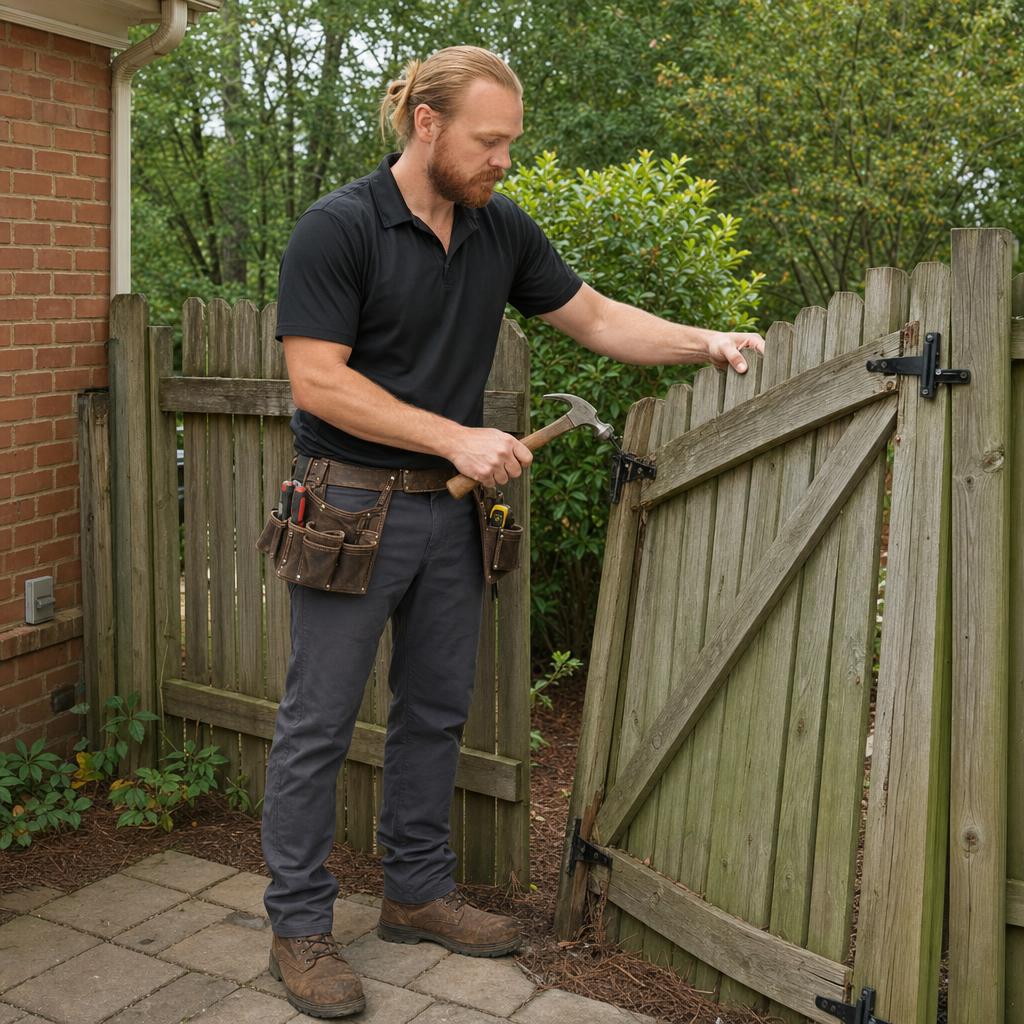
A fence gate that dragged a little in June may become difficult to close by September. After a humid Northern Virginia summer, wood movement, loose hardware, soil changes, and repeated use can leave a gate sagging or out of alignment. Addressing the problem before fall can prevent additional strain on the hinges, latch, frame, and supporting post.
Not every dragging gate needs to be replaced. In many cases, the problem can be traced to a few specific parts. The important step is finding the actual cause rather than moving the latch or trimming the bottom without checking the gate structure.
Why Fence Gates Begin to Sag
A gate places constant leverage on its hinge post. Unlike a fixed fence panel, it repeatedly swings, stops, and transfers weight through a relatively small set of fasteners. Even a well-built gate can shift as materials age and outdoor conditions change.
Common causes of a sagging or difficult fence gate include:
- Loose, undersized, rusted, or damaged hinge fasteners
- A gate frame that has shifted out of square
- A leaning, loose, or deteriorated hinge post
- Hinges that are bent, worn, or pulling away from the wood
- Swollen boards or a gate that was built with too little clearance
- A latch that no longer lines up after the gate or post moved
- Raised soil, mulch, roots, or paving beneath the gate
Northern Virginia weather can expose these weaknesses. Wood absorbs moisture during humid and rainy periods, then contracts as conditions become cooler or drier. Repeated wet and dry cycles may loosen connections or make an already tight opening harder to use. Ground movement can also affect the position of fence posts.
Start by Identifying What Moved
Before tightening or replacing anything, open and close the gate slowly. Watch the hinge side, latch side, and bottom edge. The location of the rubbing or movement often points to the underlying issue.
Check the hinges and fasteners
Look for hinge screws or bolts that are backing out. If the hardware moves while the gate swings, tightening it may help, but only if the surrounding wood is still solid. A fastener installed in split, enlarged, or deteriorated wood may loosen again quickly.
Also check whether a hinge is bent or separating from the gate frame. Supporting the gate before removing hinge hardware is important because an unsupported gate can twist or drop suddenly.
Check whether the gate is square
A rectangular gate should remain square rather than shifting into a diamond shape. If the top of the latch side has dropped while the hinge post remains upright, the gate frame may be racked. A diagonal brace or an appropriate anti-sag adjustment may help, depending on the gate’s design and condition.
Brace direction matters on a wood gate. A compression-style wood brace generally runs from the lower hinge area toward the upper latch corner so the gate’s weight is transferred back toward the hinge side. Installing a brace in the wrong direction may do little to correct the sag.
Check the hinge post
If the entire hinge post leans when the gate is closed, adjusting the gate alone will not solve the problem. Stand back and compare the post with nearby vertical lines. Then gently move the gate while watching the base of the post.
A loose post may need to be reset or repaired. If the wood is soft, split, or deteriorated near the ground, replacement may be the more practical option. Moving the latch to match a leaning post can provide temporary alignment, but it does not correct the structural cause.
Look beneath and around the gate
Sometimes the gate has not moved much at all. Mulch, soil, roots, or a shifted paver may be reducing the clearance underneath. Check the full swing path before cutting the gate. Trimming wood should generally be considered only after confirming that the posts, hinges, and frame are stable.
Repair Options Depend on the Cause
A fence gate repair may involve one or several adjustments. Possible work includes securing or replacing hardware, correcting the frame, adding or adjusting bracing, realigning the latch, repairing damaged boards, or addressing the supporting post.
Simply relocating the latch is reasonable when the gate is structurally sound and the alignment change is minor. It is less useful when the gate continues to drop or the hinge post is moving. Likewise, shaving material from the bottom can create clearance, but it will not stop ongoing sagging.
For painted or finished gates, exposed cuts and repaired areas may also need suitable finishing to reduce moisture exposure. The surrounding fence should be checked at the same time for loose pickets, protruding fasteners, and other small problems that are easier to address before colder weather.
When a Homeowner Can Make a Minor Adjustment
A straightforward latch adjustment or tightening of sound hardware may be manageable with basic tools. Before beginning, make sure the gate is supported and verify that there are no sharp fasteners, split boards, or unstable posts.
Consider professional repair when:
- The gate is heavy or difficult to support safely
- The hinge post moves at its base
- Fasteners no longer hold in the existing wood
- The frame is visibly twisted or out of square
- Several boards or structural parts are deteriorated
- The gate repeatedly falls out of alignment after adjustment
Why September Is a Good Time to Inspect the Gate
September is a practical transition point for exterior repairs in communities such as Annandale, Burke, Springfield, Fairfax, and Alexandria. Summer growth and moisture-related movement are easier to spot, while the gate still needs to work reliably through falling leaves and colder weather.
Clear leaves and debris from around the posts, keep mulch from piling against wood, and test both the gate and latch. A gate should move without excessive force, remain reasonably level, and latch without needing to be lifted by hand.
Fence Gate Help from Handy Vikings
Handy Vikings handles fence repair and general home repairs throughout Northern Virginia. The business is owner-operated by Drew, so homeowners can discuss the problem directly and determine whether the gate needs a small adjustment, hardware work, frame correction, or a more involved repair.
For help with a dragging, sagging, or difficult-to-latch fence gate, call (703) 424-4285 or request an estimate from Handy Vikings.
Frequently Asked Questions
Can a sagging fence gate be repaired without replacing it?
Often, yes. If the gate frame and posts are still sound, the repair may involve securing the hinges, replacing damaged hardware, correcting the frame, adding proper bracing, or realigning the latch. Replacement may be more practical when the frame, boards, or supporting post are significantly deteriorated.
Why does my fence gate only stick during humid weather?
Wood can absorb moisture and expand during humid or rainy conditions. A gate with narrow clearance may begin rubbing even if it worked previously. Humidity can also reveal loose hardware or a frame that is already slightly out of square. The gate should be inspected before material is trimmed away.
Will moving the latch fix a gate that no longer closes?
Moving the latch can correct a minor alignment issue when the gate and posts are stable. It will not fix a leaning post, loose hinges, or a frame that continues to sag. Correcting the underlying movement first usually provides a more dependable repair.
Should I trim the bottom of a gate that drags?
First check for loose hinges, a sagging frame, a leaning post, or raised material beneath the gate. Trimming may be appropriate when the structure is stable and clearance is the only issue. Cutting too soon can leave an uneven gap while allowing the original problem to worsen.